Low-code platforms are transforming how IoT apps are built. By using drag-and-drop tools and visual interfaces, they drastically reduce the need for manual coding, cutting development time by up to 80% and costs by as much as 50%. These platforms make it easier to create apps that work across devices like smartphones, desktops, and industrial equipment, even for users without advanced technical skills, often utilizing top no-code tools to bridge the gap.
Key Points:
- Speed: Build IoT apps in days or hours instead of months.
- Cost Savings: Up to 11x cheaper than traditional development.
- Scalability: Easily handle thousands of devices with cloud integration.
- Security: Built-in features like encryption and compliance with regulations.
Platforms like Node-RED and Mendix offer tools for IoT-specific needs, from connecting devices to managing data. Whether you're in healthcare, manufacturing, or smart home tech, low-code platforms provide a faster, more efficient way to develop IoT solutions.
For businesses, this isn't just a convenience - it's a practical solution to meet the growing demand for IoT apps while addressing the shortage of skilled developers.

Low-Code IoT Development: Key Benefits and Statistics
EP 1 - FlowFuse’s Nick O’Leary on Low-Code Development and Its Impact on IoT
sbb-itb-3a330bb
Benefits of Low-Code for Cross-Platform IoT Development
Low-code platforms offer three standout advantages for IoT projects: faster development, lower costs, and built-in scalability and security. These features make low-code an appealing choice for businesses looking to streamline their IoT development process.
Faster Development Time
Low-code platforms rely on visual drag-and-drop interfaces and pre-built components to simplify application development. These tools can cut manual coding time by as much as 80%. For instance, developers can skip weeks of coding by using ready-made connectors for protocols like MQTT, HTTP, CoAP, and LoRaWAN.
Take this example: In January 2026, a financial services company used Microsoft Power Platform to build a loan application system with document uploads and automated credit checks. The project, which would have taken six months traditionally, was completed in just two weeks - a 92% reduction in time. Similarly, a healthcare provider developed a patient scheduling app in three weeks using low-code, compared to the estimated four months required with traditional development, saving 75% of the time.
Low-code also enables rapid prototyping, often within hours. For example, setting up a user management module that traditionally takes three weeks can be done in just two hours using low-code tools. This speed is invaluable for businesses needing to adapt quickly to market demands or test new ideas. Beyond speed, these platforms also reduce costs and ensure scalability.
Lower Development Costs
Faster development naturally leads to significant cost savings. Low-code development can be up to 11 times cheaper than traditional greenfield development, as seen in various real-world projects. For example, in January 2026, an e-commerce platform used the OutSystems low-code platform to build an inventory management system that integrated Shopify, Amazon, and physical stores. The project cut costs by 70% compared to a custom-built solution.
Cost savings are largely due to the reduced need for specialized developers. By 2026, it’s estimated that 80% of low-code users will come from outside IT departments. Platforms provide pre-built modules and "vertical starter kits" for common features like user authentication and data forms, which eliminates the need for repetitive coding. In fact, about 70% of an IoT application can be built using low-code accelerators, leaving only 30% for custom logic.
"The outcome for our clients is simple - solution delivery is about 8x faster and 11x cheaper than a traditional greenfield development." - Vitaliy Paromskiy, Chief Solutions Officer, ThingsBoard
Many low-code providers also offer fixed-price models, thanks to the predictability of using pre-built components and accelerators. This approach gives businesses better control over their budgets and timelines, making IoT investments easier to plan.
Scalability and Security
Top low-code platforms also excel in scalability and security, two essential factors for IoT applications. They include built-in security protocols like TLS/SSL, AES-256 encryption, and multi-factor authentication (OAuth, JWT, API keys). This is particularly relevant as 35% of global respondents in 2021 cited standardized data security as a key reason for adopting low-code. Many platforms also come with pre-configured compliance for regulations like GDPR, HIPAA, and ISO 27001, reducing the workload for developers.
On the scalability front, integration with major cloud providers like AWS IoT Core, Google Cloud IoT, and Azure allows applications to automatically scale to accommodate thousands of devices without performance issues. Additionally, low-code platforms support edge computing, which processes data locally to minimize cloud dependency and latency. This combination ensures that IoT applications can grow from handling a handful of devices to managing tens of thousands without requiring a complete overhaul.
IT teams also benefit from centralized governance tools, such as dashboards that manage access, monitor traffic for anomalies using AI, and control device permissions across networks. By relying on pre-tested, standardized components, low-code platforms reduce manual coding errors that could otherwise introduce security vulnerabilities.
Top Low-Code Platforms for Cross-Platform IoT Apps
Picking the right low-code platform can make all the difference for your IoT project. The platforms below are known for simplifying device integration and data management while enabling cross-platform development.
Node-RED
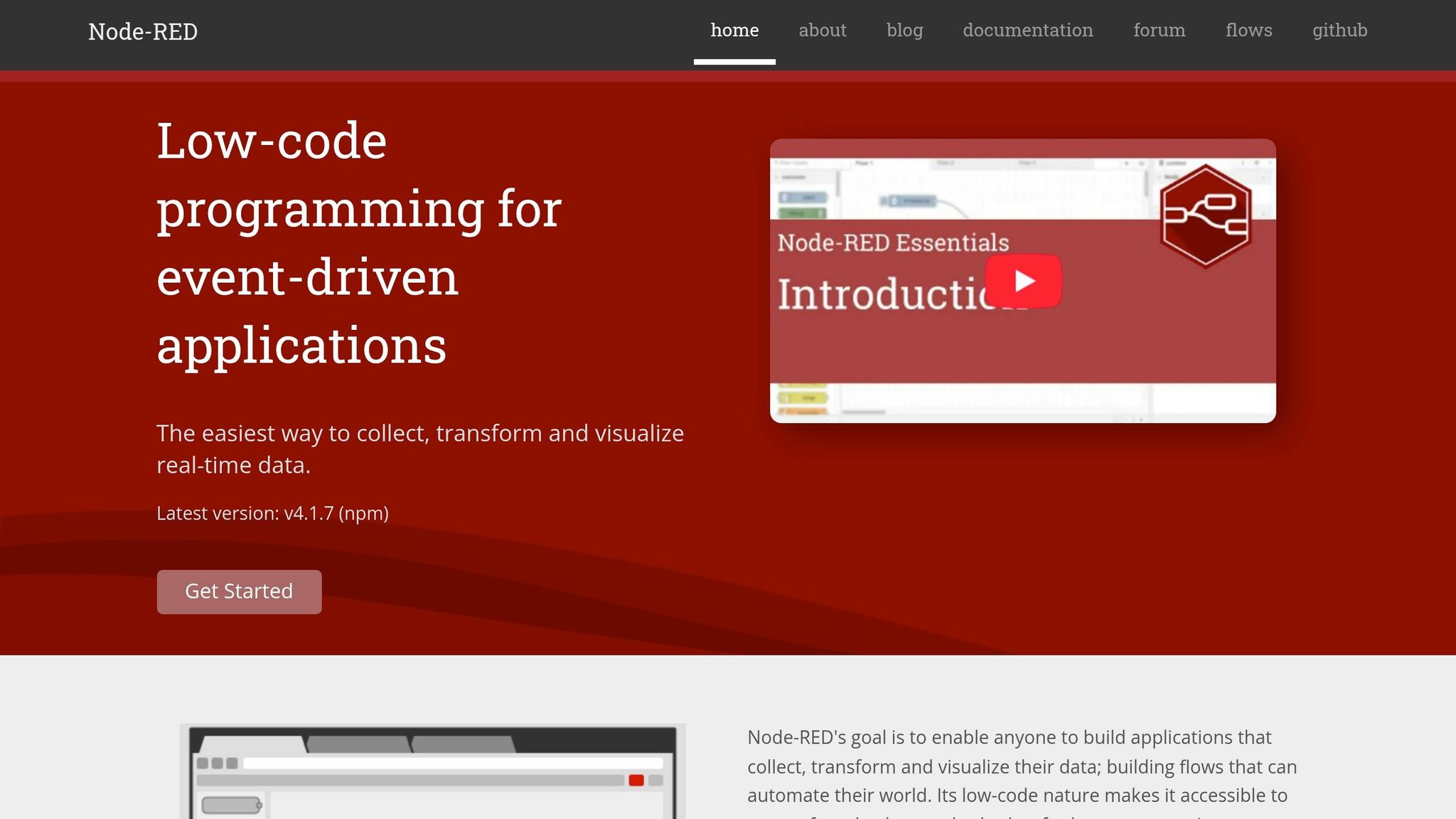
Node-RED offers a browser-based editor that connects hardware, APIs, and online services using functional nodes. Built on Node.js, it operates efficiently at the network edge on devices like Raspberry Pi or in the cloud through AWS and Azure.
The platform boasts a thriving community that has contributed over 5,000 nodes and flows. Its library includes more than 4,000 connectors for industrial protocols such as Siemens S7 and Modbus. A 2023 survey of 780 users revealed that over half had been using Node-RED for more than two years, with more than two-thirds giving it a 5 out of 5 satisfaction rating. Additionally, flows are stored as JSON files, making it easy to export and deploy application logic across different systems.
"Node-RED lets you focus on outcomes, not syntax." - Elliot Robinson, Senior Software Engineer, MobiusFlow
While Node-RED shines in event-driven wiring and edge deployment, platforms like Mendix are better suited for enterprise-grade logic and governance.
Mendix
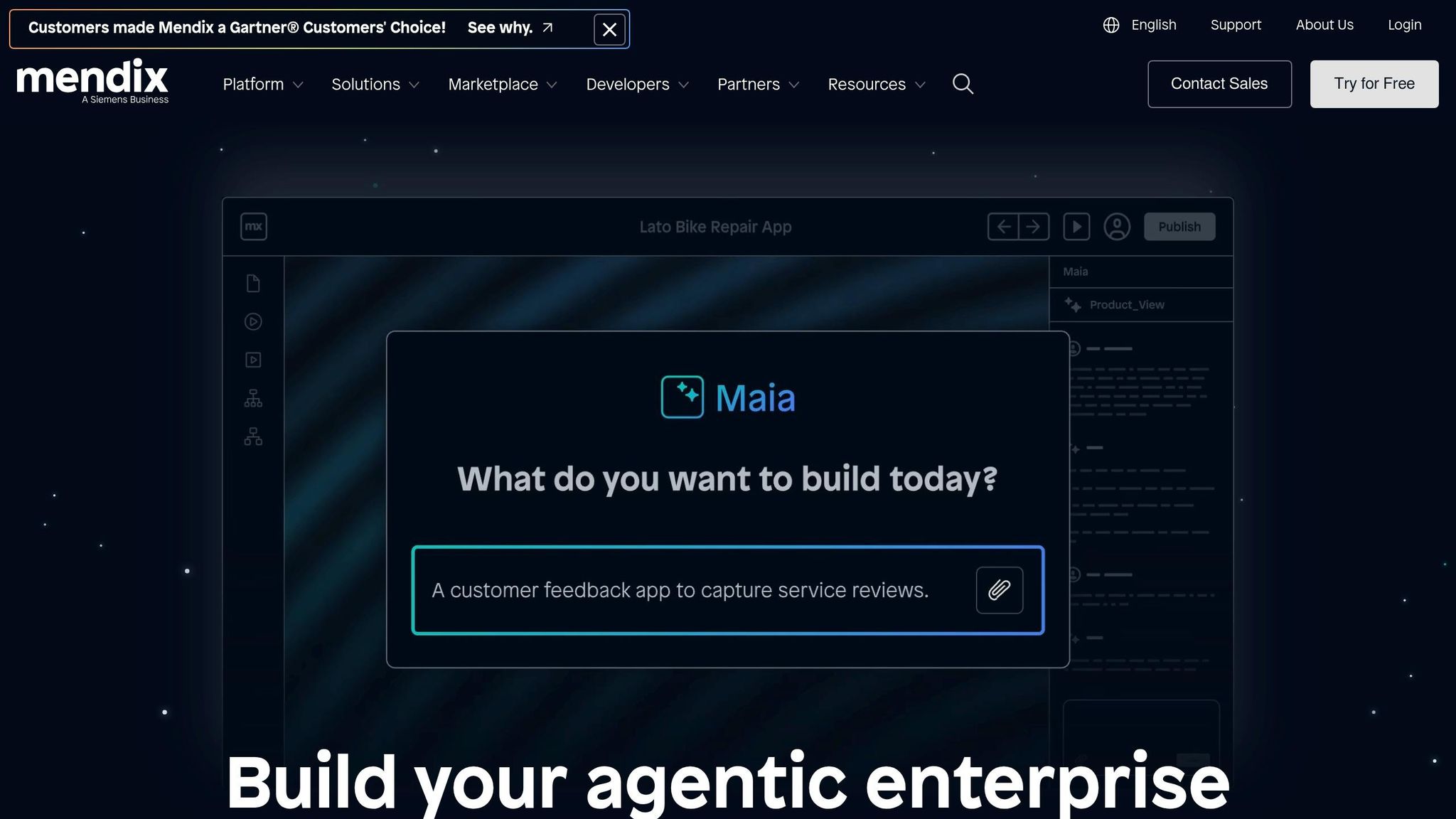
Mendix uses a visual, model-driven approach that empowers both professional developers and non-developers to create enterprise-level IoT applications. It connects seamlessly to major IoT providers like AWS, Azure, and IBM Watson using pre-built connectors, ensuring flexibility and avoiding vendor lock-in. Unlike Node-RED, which emphasizes event-driven logic, Mendix focuses on building complex business applications with integrated governance tools.
"The application layer is where most business value is created." - Mendix
As a cloud-native platform, Mendix supports auto-provisioning and auto-healing, making it easier to scale projects from prototypes to full-scale deployments. For a deeper dive into comparisons of development tools, automation platforms, and web app builders, check out the Best Low Code & No Code Platforms Directory.
How to Build a Cross-Platform IoT App with Low-Code
Selecting a Platform and Initial Setup
When starting with low-code for IoT app development, choosing the right platform is critical, requiring a look at the Gartner low-code development platforms overview to understand market leaders. Begin by identifying your specific use case - whether it's for manufacturing automation, healthcare monitoring, or managing smart home devices. This will guide you in prioritizing platform features.
Ensure the platform supports key requirements such as compatibility with legacy systems, major IoT hubs (like Azure IoT Hub or AWS IoT), and cross-platform builds for iOS, Android, and web. It should also handle IoT-specific data models and protocols like MQTT, Modbus, and REST APIs. Security is non-negotiable - look for features like data encryption, role-based access control, and compliance with regulations like GDPR.
"Low-code offers the best in flexibility and controls." - Gartner
Right from the start, enable support for both mobile and web platforms to avoid complications later. Set up authentication, configure environment settings, and connect to data sources such as Firebase or REST APIs before diving into UI design. Many platforms offer free trials - use these to test the platform with a small pilot project and ensure it meets your needs before committing to a full-scale rollout.
Creating Data Flows and Connecting Devices
Low-code platforms often include drag-and-drop tools to simplify building data flows. Using these tools, you can connect devices through protocols like MQTT, HTTP, CoAP, WebSockets, LoRaWAN, or Zigbee. For MQTT, for instance, you’ll need to configure the broker's URL (e.g., HiveMQ), specify the port (typically 8883 for encrypted connections), and input the necessary security credentials.
You can use modular components to manage data, such as property mappers for restructuring and modules for handling sensor arrays. For complex processing, many platforms allow custom logic integration using tools like Python bridges. Don’t forget to implement security checks within your data flows to ensure scalability and maintain data integrity.
Design your app with a mobile-first mindset to ensure touch-friendly functionality, then fine-tune it for web by increasing information density and adding hover effects. Set up automated triggers to send alerts or shut down equipment when sensors detect conditions like temperature spikes. Centralizing business rules and validations in the backend ensures consistent behavior across all platforms.
Testing, Deployment, and Performance Tuning
Testing should start early, using shift-left strategies and virtual devices to simulate loads. However, always validate the app on actual iOS and Android devices, as platform-specific quirks might not be evident in the editor’s preview.
Leverage CI/CD pipelines for consistent builds, testing, and deployment. Use secure OTA updates with phased rollouts and auto-rollback features to protect devices during updates. Simulate challenging network conditions - such as latency, packet loss, and disconnections - to ensure devices can store data locally and reconnect seamlessly.
To optimize performance, compress images and fonts, use native components for tasks like animations or camera access, and implement pagination for large datasets. Reduce the number of real-time listeners to conserve mobile network resources. During load testing, monitor key performance metrics like response times and throughput to identify and address bottlenecks before launch.
"Make sure you test every platform, not just web. When you press 'Preview' in the editor, you are viewing the 'Web' version of your component." - Adalo Developers
Best Practices for Cross-Platform IoT Development
Reusing Code Components
Low-code platforms make it easier to reuse standardized, pre-tested components, potentially cutting development time by up to 90%. The trick lies in consistently applying updates and logic across iOS, Android, and web platforms without needing to rebuild for each one.
Instead of starting from scratch, leverage pre-built application templates. These templates follow established best practices and can be customized to meet your specific needs. For handling data from various hardware sources, Property Mapper modules come in handy. They restructure information into a unified format, ensuring consistent processing logic regardless of the sensor type.
To maintain a uniform user interface across different screen sizes and platforms, use global themes. This eliminates the hassle of creating styles for each device. For handling complex logic that spans multiple data flows, consider Python Bridge modules. These modules can execute standardized scripts or machine learning models, potentially reducing labor costs by 30%–50%. Additionally, prioritize platforms that support one-click publishing to Google Play, the App Store, and the web from a single codebase. This approach maximizes efficiency and streamlines your development process.
Once standardized components are in place, the next step is ensuring the application performs at its best.
Improving Application Performance
Reusing components is just the start - optimizing performance is critical for creating responsive and efficient applications. Processing data locally can reduce latency, improve privacy, and enable real-time responses, which is especially important for tasks like industrial security and predictive maintenance. Property Mapper modules can help restructure data and standardize naming conventions across sources. For multi-sensory data, use Array Split and Join modules to break down large data sets into actionable insights. Performance can be tracked with TimeStamp modules, which measure execution times and data flow efficiency.
For high-performance needs, select platforms that allow custom code in languages like Java, JavaScript, or Python. Filtering data at the edge - sending only relevant anomalies instead of full sensor data streams - can significantly reduce cloud data transfer costs. This edge-cloud split strategy ensures efficiency while keeping expenses manageable.
Adding AI and Edge Computing
Integrating AI and edge computing takes IoT capabilities to the next level. Platforms like Edge Impulse and Node-RED simplify the integration of machine learning models with drag-and-drop interfaces, making these tools accessible even to those without a background in data science.
"Low-code/no-code platforms represent a revolution for edge AI, making it possible for non-expert users to adopt advanced technologies." - Giordana Francesca Brescia
For predictive maintenance, it’s essential to collect 30 to 90 days of "normal" operational data before deploying AI. This ensures the model can accurately identify anomalies without mistaking them for normal variations. A split architecture works well: edge models handle real-time anomaly detection with simple yes/no decisions, while cloud models manage more complex classifications using historical data. This approach has helped companies reduce downtime by an average of 35%. Considering that unplanned equipment failures can cost manufacturers around $260,000 per hour in lost production, this is a game-changer.
For low-power devices like the ESP32, TinyML and TensorFlow Lite allow machine learning by compressing models into the INT8 format, making them fit within limited RAM capacities of 256KB. On Linux-based edge gateways like the Raspberry Pi, WebAssembly (WASM) delivers near-native performance for portable AI binaries. Additionally, Python Bridge modules enable the execution of custom machine learning code and third-party libraries directly at the edge, allowing real-time data processing without relying on cloud round-trips.
Conclusion
Low-code platforms are proving to be a game-changer for tackling modern IoT challenges. By replacing traditional coding with visual interfaces and pre-built components, these platforms can drastically cut development time - by as much as 90% - and reduce labor costs by 30% to 50%. Plus, maintaining a single codebase for iOS, Android, and web apps makes development smoother and more efficient.
The low-code market is on a steep growth trajectory, projected to reach $36.43 billion by 2027. Companies leveraging IoT technology are already reaping rewards, such as a 24% boost in overall equipment efficiency and a 16% drop in product defects.
"Businesses that pair IoT with low-code development gain a crucial competitive advantage." - Chintan Jain
Whether you're working on industrial automation, smart home solutions, or predictive maintenance, selecting the right low-code platform is critical. Tools like Node-RED, Losant, and Power Automate each shine in specific areas - open-source projects, industrial automation, and business workflows, respectively. The secret lies in aligning your project needs with the platform's strengths.
From rapid development cycles to enhanced security, low-code platforms offer businesses the tools they need to innovate quickly and scale effectively. If you're ready to find the perfect platform for your cross-platform IoT app, head over to the Best Low Code & No Code Platforms Directory to compare top options and make the best choice for your development goals.
FAQs
Which low-code platform fits my IoT use case?
When choosing the best low-code platform for your IoT project, it’s essential to weigh factors like scalability, security, and integration capabilities. If your focus is on IoT-specific needs like device provisioning or real-time dashboards, platforms such as Blynk are tailored for these purposes. On the other hand, enterprise-grade platforms like OutSystems and Mendix excel in delivering higher security and scalability, making them ideal for more complex implementations. For simpler workflows, lightweight solutions like WeWeb or Superblocks offer easy-to-use tools that speed up IoT app development without overwhelming complexity.
How do low-code IoT apps handle offline and spotty networks?
Low-code IoT applications tackle the challenges of offline and unreliable networks through features like data caching, preloading, and automatic synchronization. These tools ensure that when connectivity is restored, everything updates seamlessly. By adopting an offline-first approach, these apps store data locally and sync it later, allowing workflows to continue without interruption. This is especially crucial for IoT solutions in remote or mobile environments, where maintaining operations and preserving data accuracy is key, even during network disruptions.
When do I need custom code in a low-code IoT app?
Custom code becomes essential in low-code IoT apps when you need advanced capabilities that go beyond what the platform's built-in tools can handle. For instance, tasks like precise hardware control, custom integrations with unique systems, advanced data analysis, or implementing specific security protocols often require custom coding.
While low-code platforms make development faster and easier, adding custom code provides the flexibility and performance needed for handling complex requirements, such as scaling applications or integrating with older, legacy systems.